What is SEO?
In today’s digital world, every business wants to appear on the first page of Google. But how do you make that happen?
The answer is SEO (Search Engine Optimization) — one of the most powerful digital marketing strategies to grow your online visibility, attract quality customers, and build long-term brand presence.
Whether you are a small business owner, startup founder, or service provider, this beginner-friendly guide will help you understand everything about SEO and how it can help you rank on Google.
1. Introduction to SEO
SEO stands for Search Engine Optimization — the process of improving your website so it appears higher on search engines like Google, Bing, and Yahoo.
When people search for products or services you offer, SEO ensures your business appears in front of them at the right time.
In simple words:
SEO = More Visibility = More Website Traffic = More Customers
Businesses use SEO services to improve their ranking and stay ahead of competitors.
2. Why SEO is Important for Businesses
Here’s why SEO matters for every business:
-
93% of online experiences begin with a search engine
-
Customers trust websites that appear on the first page
-
SEO brings free, organic traffic
-
It generates long-term results
-
Helps build brand credibility and authority
Whether you run a bakery, real estate firm, salon, or e-commerce store, SEO helps you reach people who are actively searching for what you offer.

3. How SEO Works (Simple Explanation)
Search engines want to show users the best and most relevant content.
SEO helps your website become that “best result.”
Here’s how it works:
-
Google crawls your website
Google’s bots scan your pages to understand your content. -
It indexes your pages
Your website is stored in Google’s database. -
Google ranks your pages
Based on relevance, quality, speed, user experience, and many other factors.
If your website is optimized well, Google will show it on top search results.
4. Types of SEO
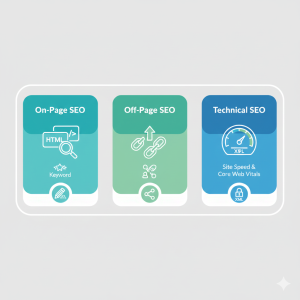
To succeed in SEO, you must understand its three main parts:
A. On-Page SEO
This includes everything you do on your website:
-
Keywords
-
High-quality content
-
Meta titles & descriptions
-
Internal linking
-
Optimized images
B. Off-Page SEO
This focuses on activities outside your website:
-
Backlinks
-
Social media signals
-
Brand mentions
-
Guest posting
C. Technical SEO
This improves the website’s backend:
-
Website speed
-
Mobile-friendliness
-
Secure HTTPS
-
Clean URL structure
-
Sitemap & robots.txt
A combination of all three helps your website rank better.
5. Key SEO Ranking Factors
Google considers 200+ factors to rank a website. Some of the most important include:
-
High-quality, helpful content
-
Relevant keywords
-
Mobile-friendly design
-
Page loading speed
-
Quality backlinks
-
User experience
-
Website structure
-
SSL certificate (HTTPS)
Optimizing these factors increases your chances of ranking on Google.
6. Benefits of SEO for Small Businesses
SEO is a game changer for small businesses. Here’s why:
-
You attract high-intent customers
-
You get free traffic without paying for ads
-
You build trust and authority
-
You compete with bigger brands
-
You improve brand awareness
-
You increase leads & sales
If you want long-term business growth, SEO is the best investment.
7. Common SEO Mistakes to Avoid
Many businesses fail at SEO because of common mistakes like:
-
Using the wrong keywords
-
Publishing low-quality content
-
Ignoring mobile optimization
-
Not building backlinks
-
Stuffing keyword
-
No proper internal linking
-
Slow website speed
-
Not tracking results
Avoiding these mistakes will put you ahead of many competitors.
8. How a Digital Marketing Agency Can Help with SEO
A professional agency (like yours) provides expert SEO services that include:
-
Keyword research
-
Competitor analysis
-
On-page & off-page optimization
-
Technical SEO fixes
-
Website audits
-
Content strategy
-
Link building
-
Monthly reports & performance tracking
Hiring the best SEO agency saves you time, increases results, and ensures your website ranks on Google faster.